
Finding the Best IPTV service in 2026 feels overwhelming. With hundreds of providers promising thousands of channels, 4K streams, and rock-solid reliability, how do you separate legitimate premium services from overhyped disappointments? This guide cuts through the noise. Whether you are new to IPTV or looking to upgrade your current setup, you will learn exactly what to look for, what to avoid, and how to choose a subscription that delivers real value for your money.
What Is IPTV?
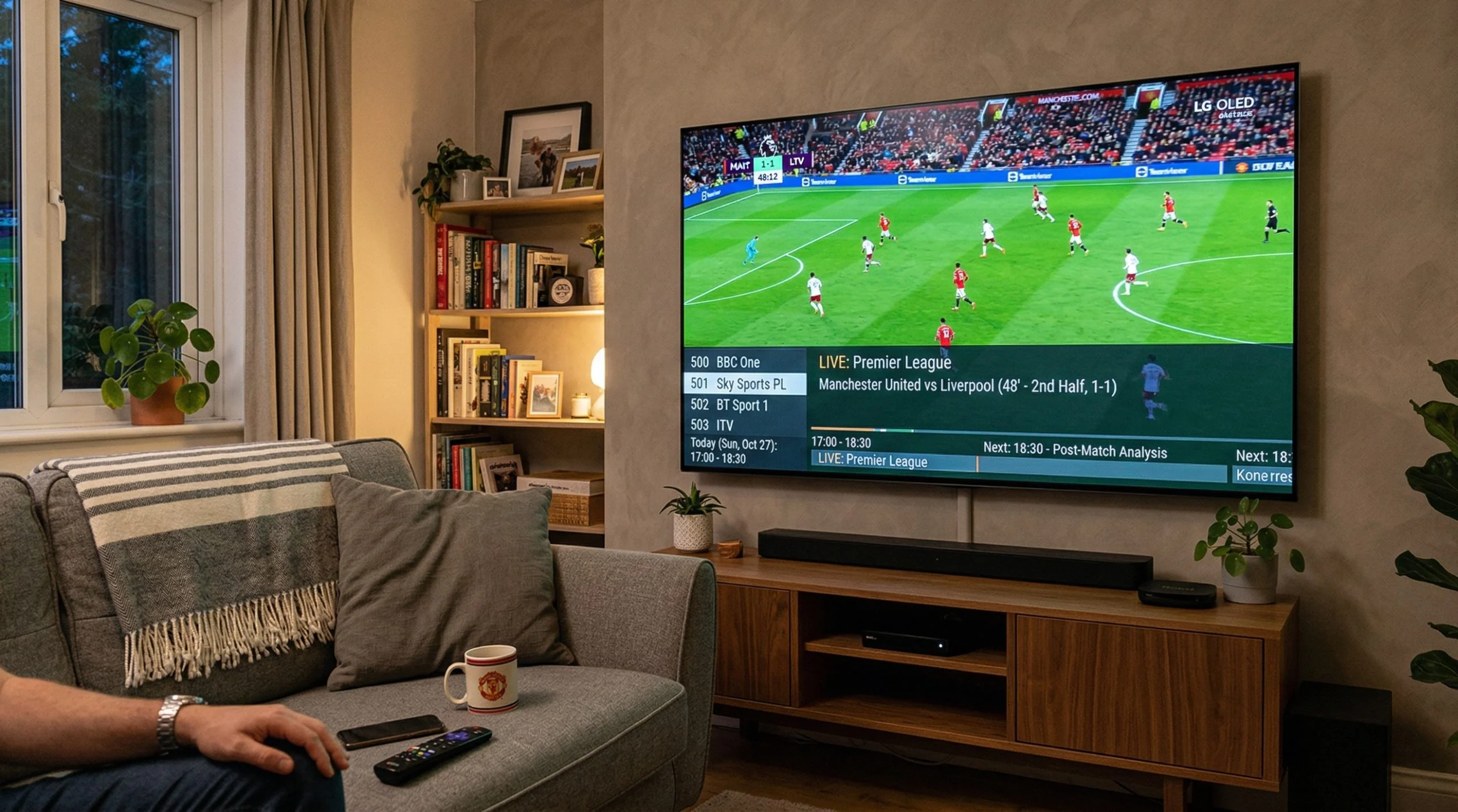
IPTV stands for Internet Protocol Television. Unlike traditional broadcast television that sends signals through terrestrial antennas, satellite dishes, or coaxial cable lines, IPTV delivers television content through your internet connection using the same protocol that powers websites, email, and online gaming.
The fundamental difference is control. Traditional TV pushes content to you on a fixed schedule. Premium IPTV gives you the freedom to watch what you want, when you want, on the device you prefer. This shift from push-based broadcasting to pull-based streaming represents the single biggest transformation in how humanity consumes video content since the invention of color television.
There are three primary types of IPTV services. Live television mirrors traditional broadcasting but streams over IP networks. Time-shifted media includes catch-up TV and start-over features that let you replay recently aired content. Video on Demand operates like a digital library where you select movies, shows, or documentaries from a catalog and stream them instantly.
What makes modern IPTV compelling in 2026 is the convergence of these three formats into unified platforms. You no longer need separate apps for live news, sports, and movies. A single IPTV Subscription consolidates everything into one interface, one bill, and one seamless experience.
How IPTV Works
Understanding the mechanics behind IPTV helps you make smarter purchasing decisions. When you subscribe to an IPTV Subscription, the provider maintains servers that encode television signals into digital packets. These packets travel across the internet to your device, where they are decoded and displayed as video.
The process begins at the source. Content providers capture live feeds from broadcast networks, sports stadiums, and movie studios. These raw feeds enter the IPTV provider’s headend infrastructure, where specialized hardware encodes the video into compressed formats like H.264 or H.265. Compression matters because it determines how much bandwidth you need and how sharp the final image appears.
Once encoded, the content sits on content delivery networks. These networks distribute data across multiple geographic locations so that a viewer in Los Angeles receives their stream from a California server rather than one in New York. This geographic distribution reduces latency, minimizes buffering, and keeps channel switching fast.
Your device connects to these servers through an app or dedicated player. The app authenticates your account, retrieves the channel list, and establishes a direct stream. Modern apps use adaptive bitrate streaming, which automatically adjusts video quality based on your current internet speed. If your connection dips momentarily, the stream drops from 4K to 1080p rather than freezing entirely.
The best IPTV providers use multicast technology for live channels and unicast for on-demand content. Multicast sends one stream to many users simultaneously, reducing server load. Unicast creates individual streams for each viewer, enabling pause, rewind, and fast-forward functionality. Providers that master both technologies deliver the most stable experience.
Benefits of IPTV Over Traditional TV
Cutting the cord is not just a trend. It is a permanent shift in consumer behavior driven by genuine advantages that cable and satellite simply cannot match. Here is why millions of households are making the switch.
Cost Savings That Add Up
The average American cable package now costs over one hundred dollars monthly when you factor in equipment rentals, regional sports fees, and broadcast surcharges. Premium IPTV services typically cost a fraction of that while delivering comparable or superior channel lineups. Over a year, the savings often exceed eight hundred dollars.
Unmatched Content Variety
Traditional providers lock you into rigid bundles. You pay for two hundred channels just to watch the ten you actually care about. A quality Streaming Service gives you access to thousands of channels from around the world, including niche content that cable ignores entirely.
Watch Anywhere, Anytime
Your subscription travels with you. Watch the morning news on your phone during your commute, catch the game on your tablet at a coffee shop, and finish a movie on your living room television. This multi-screen flexibility is impossible with traditional cable boxes that tether you to a single room.
No Contracts or Hidden Fees
Most IPTV providers operate on month-to-month terms. You are not locked into a two-year contract with early termination penalties. If you are unsatisfied, you cancel. This accountability forces providers to maintain high standards or lose subscribers immediately.
Superior Video Quality
While cable struggles to deliver consistent 1080p, leading IPTV platforms stream in full high definition and true 4K resolution. As internet speeds increase globally, IPTV quality will only improve while cable infrastructure remains physically constrained by aging copper lines.
Why IPTV Is Exploding in 2026
The numbers tell a compelling story. The global IPTV market surpassed one hundred billion dollars in 2026 and is projected to grow at a compound annual growth rate exceeding fifteen percent through the next decade. North America alone accounts for over one-third of global revenue, driven by relentless cord-cutting momentum.
Global IPTV market value in 2026
US cord-cutter households by 2026
Worldwide IPTV subscriber households
North America global market share
Several forces are accelerating this growth simultaneously. Broadband infrastructure has reached maturity in most developed nations. Fiber-optic connections and 5G wireless networks provide the stable, high-speed foundation that IPTV requires. Without reliable internet, IPTV cannot function. With gigabit speeds becoming standard, the technical barrier has vanished.
Consumer expectations have shifted dramatically. The Netflix generation grew up expecting instant access, personalized recommendations, and binge-worthy libraries. They refuse to accept rigid programming schedules, commercial-heavy broadcasts, or limited device support. IPTV meets these expectations natively.
Smart TV adoption is another massive catalyst. Nearly half of all television sales now include built-in internet connectivity. These devices come with app stores that make installing an IPTV player as simple as downloading Instagram. No set-top boxes. No cables. No technician visits.
Artificial intelligence is also reshaping the experience. Modern platforms analyze your viewing habits to surface content you actually want to watch. The days of scrolling through endless channel guides are ending. AI curates your home screen, predicts your interests, and even alerts you when a favorite show goes live.
Essential Features to Look For
Not all IPTV services are created equal. The difference between a frustrating, buffering nightmare and a silky-smooth entertainment hub comes down to specific features. Here is what separates the best from the rest.
Live TV Channels
The core promise of any Reliable IPTV service is live television. But quantity means nothing without quality. A provider boasting twenty thousand channels is worthless if half are dead links, low-resolution duplicates, or foreign-language stations you will never watch.
Evaluate the channel list carefully. Look for major networks like ABC, CBS, NBC, Fox, and CNN. Verify that regional channels specific to your area are included. If you have international interests, confirm that relevant foreign-language stations are present and actually stream reliably.
Channel stability matters more than channel count. The best providers maintain redundant feeds for popular stations. If one server experiences issues, your stream automatically fails over to a backup source. You should never miss the final minutes of a championship game because a single server went offline.
Sports Coverage
For sports fans, IPTV is a game-changer. A Sports IPTV package should include ESPN, Fox Sports, NBC Sports, NFL Network, NBA TV, MLB Network, and NHL Network. Beyond American leagues, look for international football through channels like beIN Sports and Sky Sports.
Pay-per-view events are where providers differentiate themselves. The best services include UFC fights, boxing matches, and wrestling events within the base subscription. Others charge extra or omit them entirely. Check the policy before subscribing if combat sports matter to you.
Sports streaming demands exceptional server infrastructure. Live events create massive simultaneous traffic spikes. A provider using outdated middleware or overloaded servers will buffer precisely when the action peaks. Look for services that explicitly advertise anti-freeze technology and load balancing for sports content.
Movies and On-Demand Content
Movie lovers should prioritize VOD library size and update frequency. A robust Streaming Service offers thousands of films spanning classics, recent blockbusters, independent cinema, and documentaries. The library should refresh weekly with new releases.
Quality varies enormously. Some providers offer CAM rips with theater audiences audible in the background. Premium services deliver proper digital releases in full high definition or 4K with surround sound. If you invested in a home theater system, verify that the provider supports high-bitrate streams that do justice to your equipment.
TV Shows and Series
Binge-watching entire seasons is now standard behavior. Your IPTV platform should offer complete series runs, not just scattered episodes. Look for current shows updated within hours of airing alongside complete back catalogs of classics.
Organization matters. Shows should be sorted by genre, network, popularity, and release date. A search function that actually works saves enormous frustration. Nothing kills momentum like hunting for season three of a series while the app crashes repeatedly.
Video Quality and 4K Streaming
Video quality is where marketing claims and reality often diverge. Many providers advertise 4K support while delivering heavily compressed streams that look worse than proper 1080p. True 4K IPTV requires substantial bandwidth both on your end and the provider’s server side.
For genuine 4K, you need a minimum internet speed of twenty-five megabits per second. The provider must encode at high bitrates using efficient codecs like H.265. Ask about average bitrates before purchasing. A 4K stream at five megabits per second will look terrible. A 1080p stream at eight megabits per second will look significantly better.
Also consider high dynamic range and Dolby Vision support. These technologies expand color range and contrast, creating images that pop off the screen. If you own a modern OLED or QLED television, HDR compatibility transforms the viewing experience.
Always test video quality during peak evening hours between 7 PM and 11 PM. Many providers deliver flawless streams at noon when server load is light but crumble under prime-time demand. A 24-hour trial is essential for verifying real-world performance.
Device Compatibility
A great IPTV service works flawlessly across every screen you own. Device support is not a luxury. It is a necessity for modern households. Here is what to expect from a top-tier provider.
| Device | Compatibility | Key Considerations |
|---|---|---|
| Amazon Firestick | Essential | Look for dedicated Firestick apps with remote-optimized navigation |
| Android TV | Essential | Native Android TV apps offer the smoothest experience |
| Apple TV | Recommended | iOS apps should support AirPlay and tvOS interfaces |
| Samsung Smart TV | Recommended | Tizen OS apps prevent the need for external hardware |
| LG Smart TV | Recommended | WebOS support enables direct installation without boxes |
| Windows PC | Standard | Web players or dedicated Windows clients |
| Mac | Standard | macOS apps or browser-based streaming |
| iPhone / iPad | Standard | iOS apps should support offline downloads where possible |
Firestick remains the most popular streaming device in North America due to its low cost and ease of use. A provider without a polished Firestick app is immediately suspect. Android TV and Google TV are rapidly gaining market share as television manufacturers integrate these operating systems directly into new models.
Smart TV native apps represent the future. Samsung and LG dominate the television market globally. Providers offering dedicated Tizen and WebOS apps demonstrate serious technical investment. If you can install the service directly on your television without purchasing additional hardware, your setup becomes cleaner and more reliable.
Customer Support Quality
Technology fails. When it does, you need help fast. Evaluate a provider’s support infrastructure before committing. The best services offer 24/7 live chat with response times under five minutes. Email support should resolve issues within hours, not days.
Look for comprehensive knowledge bases and setup tutorials. Video guides for installing apps on Firestick, Android TV, and Smart TVs indicate a provider that invests in customer success. Contact Us options should be easy to find and actually connect you to humans, not endless chatbots.
Community presence matters too. Active Telegram groups, Discord servers, or Reddit communities show engaged user bases. These forums often solve problems faster than official channels because experienced users share workarounds in real time.
VPN Compatibility
Virtual private networks serve multiple purposes for IPTV users. They encrypt your traffic, preventing internet service providers from throttling streaming speeds. They also allow access to geo-restricted content and add a layer of privacy to your viewing habits.
Not all IPTV services work well with VPNs. Some block VPN IP addresses entirely. Others suffer severe buffering when routed through encrypted tunnels. The best providers either operate their own VPN-friendly infrastructure or explicitly list recommended VPN services that work seamlessly with their platform.
If privacy is a priority, test your VPN during the trial period. Verify that channel switching remains fast and that 4K streams do not degrade. A provider that claims VPN support but delivers a broken experience when one is active is not worth your money.
Electronic Program Guide
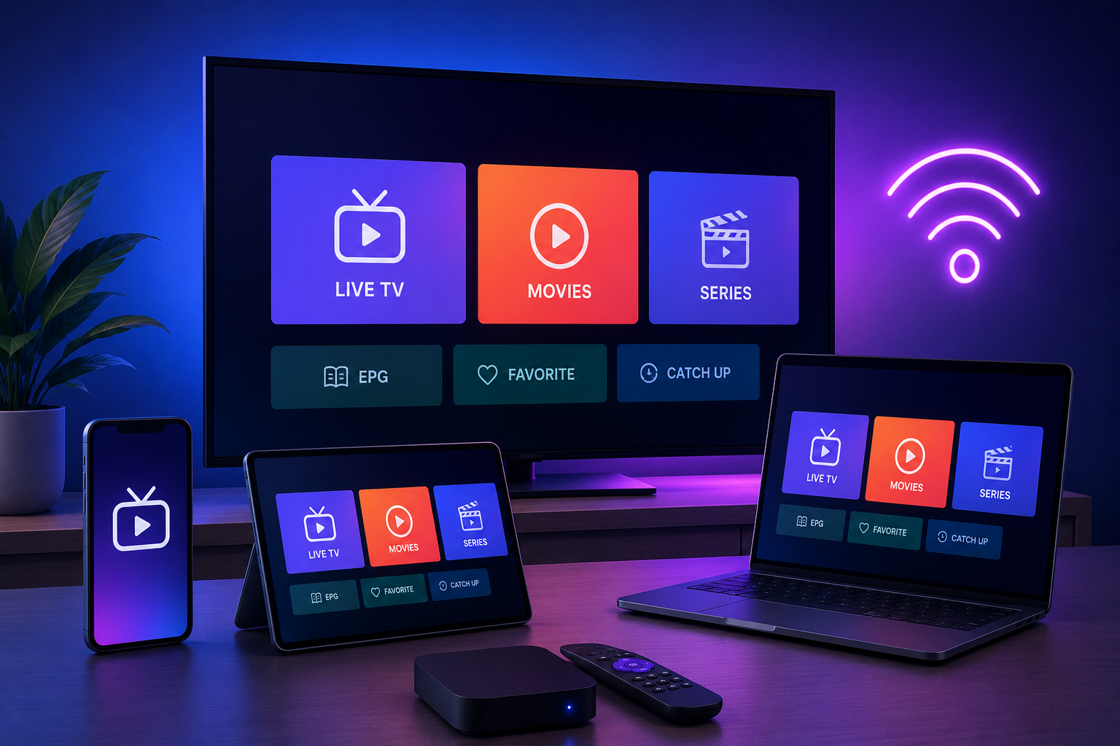
The Electronic Program Guide is your television compass. A quality EPG displays accurate schedules for upcoming shows, current program information, and often synopses or cast details. Without a reliable EPG, you are channel surfing blindly.
Accuracy is the critical factor. Some providers populate their guides with generic or outdated data. You click on a movie at 8 PM only to find a news broadcast playing instead. Premium services update their EPG data multiple times daily and cover at least seven days forward.
Visual design also impacts usability. The guide should be readable from across the room, with high contrast, clear typography, and intuitive navigation. A cluttered, ugly EPG ruins the experience regardless of how good the streams are.
Catch-Up TV
Life interrupts television. Catch-up TV solves this by letting you replay recently aired content without recording it manually. Look for services offering at least seventy-two hours of catch-up for major channels. Some premium platforms extend this to seven days or more.
The feature should be easy to access. Ideally, you long-press a channel in the EPG and select “Catch Up” to see available replays. Complicated workarounds involving external apps or manual URL entry indicate immature technology.
Video on Demand
VOD libraries separate hobbyist providers from professional platforms. A serious IPTV Subscription includes thousands of movies and series organized by category, year, rating, and popularity. Search functionality should be fast and accurate.
Update frequency reveals operational quality. Top-tier providers add new movies within days of digital release and new TV episodes within hours of broadcast. Stale libraries that have not been updated in months suggest a neglected service on autopilot.
How to Choose the Best IPTV Subscription
Selecting the right service requires systematic evaluation. Follow this framework to avoid impulse decisions and buyer’s remorse.
Start with a trial. Never purchase a long-term subscription without testing first. A 24-hour or 48-hour trial lets you verify stream quality, channel availability, and app stability on your specific devices. Use this window to test during peak hours, switch between channels rapidly, and explore the VOD library.
Verify channel authenticity. Some providers inflate their channel counts by splitting one channel into multiple regional variants or including dead stations. Scroll through the full list. Test ten channels you care about most. If three fail to load or buffer constantly, move on.
Check server infrastructure. Ask the provider about their server locations, load balancing, and anti-freeze technology. Providers using bare-metal servers with geographic distribution deliver better performance than those reselling cheap shared hosting. Transparency about infrastructure is a trust signal.
Evaluate payment security. Legitimate providers offer secure payment gateways. Be wary of services that only accept cryptocurrency or untraceable payment methods. While privacy matters, complete payment anonymity often correlates with fly-by-night operations.
Read independent reviews. Search for user experiences on forums and social media. Look for patterns. One angry review means nothing. Twenty complaints about the same buffering issue reveals a systemic problem. Pay attention to how the provider responds to criticism.
Consider your primary use case. Sports fans need different features than movie buffs. Families with children need parental controls. International viewers need specific language channels. Match the provider’s strengths to your actual viewing habits rather than chasing the highest channel count.
When comparing plans, calculate the per-month cost rather than being dazzled by long-term discounts. A 12-month plan at $60 sounds cheaper than monthly at $10, but only if the service survives the year. Start monthly until you trust the provider’s stability.
Mistakes Buyers Make
Learning from others’ errors saves money and frustration. These are the most common pitfalls we see new subscribers fall into.
Chasing channel quantity over quality. A service advertising fifty thousand channels is not necessarily better than one with five thousand. Many of those extra channels are duplicates, foreign stations, or low-bitrate filler. Focus on whether the channels you actually watch work perfectly.
Ignoring internet requirements. IPTV needs stable bandwidth. If your connection drops constantly or you share a slow connection with a large household, even the best provider will disappoint. Upgrade your internet before blaming the service.
Buying based on price alone. Extremely cheap subscriptions often indicate oversold servers, pirated content, or outright scams. Quality infrastructure costs money. If a deal seems too good to be true, it probably is. A Reliable IPTV service prices its offerings to sustain operations.
Skipping the trial period. Some buyers commit to a year to save a few dollars without testing. Then they discover the app crashes on their device, their favorite sports channel buffers, or the EPG is completely wrong. Always test before committing.
Using outdated hardware. A first-generation Firestick or a five-year-old Smart TV may lack the processing power for modern IPTV apps. Laggy navigation and failed streams often stem from insufficient device memory rather than provider issues.
Neglecting backup options. Even excellent providers experience occasional outages. Smart users maintain a secondary service for critical events. If your primary provider goes down during the Super Bowl, you will be grateful for a backup plan.
Safety Tips for IPTV Users
Protecting yourself while streaming requires basic precautions. These habits keep your data secure and your experience smooth.
Use a dedicated streaming device. Avoid installing IPTV apps on work computers or devices containing sensitive personal information. A dedicated Firestick or Android box costs little and isolates your entertainment from your professional life.
Keep apps updated. Providers release updates to fix bugs, improve stability, and patch security vulnerabilities. Enable automatic updates where possible. Running outdated software exposes you to known exploits.
Secure your home network. Change default router passwords, enable WPA3 encryption, and disable remote management features you do not use. A compromised router gives attackers access to every device on your network.
Avoid suspicious downloads. Only install apps from official provider websites or trusted app stores. Random APK files from forums may contain malware that steals credentials or hijacks your device for botnet activity.
Use strong unique passwords. Never reuse your IPTV password across other accounts. If a provider suffers a data breach, unique credentials prevent attackers from accessing your email, banking, or social media.
Monitor your connection. If you notice unusual data usage or network slowdowns, investigate immediately. Unexpected activity may indicate unauthorized access or background processes consuming bandwidth.
Feature Comparison Tables
Streaming Quality Standards
| Quality Tier | Resolution | Required Speed | Best For |
|---|---|---|---|
| Standard Definition | 480p | 3 Mbps | Mobile viewing, slow connections |
| High Definition | 720p – 1080p | 8 Mbps | Most living room televisions |
| Full HD | 1080p High Bitrate | 12 Mbps | Large screens, quality-focused viewers |
| 4K Ultra HD | 2160p | 25 Mbps | 4K TVs, home theaters, sports |
| 4K HDR | 2160p + HDR | 30 Mbps | Premium OLED and QLED displays |
Subscription Benefits Comparison
| Feature | Basic Plans | Premium Plans |
|---|---|---|
| Live Channels | 2,000 – 5,000 | 10,000 – 20,000+ |
| VOD Library | Limited or none | 50,000+ titles |
| 4K Content | Rare | Extensive sports and movies |
| Multi-Device | 1 screen | 2 – 5 simultaneous connections |
| Catch-Up TV | 24 hours | 3 – 7 days |
| EPG Accuracy | Basic | Detailed with synopses |
| Customer Support | Email only | 24/7 live chat |
| PPV Events | Extra cost | Included |
Pros vs Cons of IPTV
| Pros | Cons |
|---|---|
| Significantly lower cost than cable | Requires stable internet connection |
| Massive channel and VOD selection | Quality varies between providers |
| Watch on any device, anywhere | Some services lack proper licensing |
| No contracts or hidden fees | Occasional server maintenance downtime |
| 4K and HDR support | Learning curve for new users |
| Personalized recommendations | Device compatibility issues on older hardware |
| Catch-up and time-shift features | Legal gray areas with some providers |
Buying Checklist
Before you enter your payment details, run through this checklist. Every box should be ticked.
- Trial period tested successfully on your primary device
- All must-have channels verified working during peak hours
- Internet speed confirmed at 25+ Mbps for 4K or 8+ Mbps for HD
- App installed and navigation feels intuitive
- EPG displays accurate program information
- VOD library contains content you actually want to watch
- Sports channels tested during a live event
- Customer support responded to a pre-sale question promptly
- Payment method is secure and refundable if possible
- Provider offers setup guides for your specific devices
- VPN compatibility confirmed if you require it
- Simultaneous connections match your household needs
- Catch-up TV duration meets your viewing habits
- No excessive buffering during your trial period
- Provider has active community or social media presence
Never share your IPTV login credentials with strangers offering “free trials” or account splits. These are common phishing schemes designed to steal your subscription or payment information. Keep your account details private.
Final Verdict
The best IPTV subscription in 2026 is the one that aligns with your specific needs, budget, and technical setup. There is no universal winner because households vary enormously. A sports fanatic needs different features than a movie-loving family or an international viewer seeking foreign-language news.
That said, certain universal standards separate professional services from amateur operations. Look for providers with transparent infrastructure, responsive Contact Us channels, robust server networks, and polished apps across multiple platforms. Prioritize stability over channel count. Demand trial periods. Verify video quality under real-world conditions.
The IPTV market will continue growing at double-digit rates through the decade. Broadband expansion, 5G rollout, and smart TV adoption remove every remaining technical barrier. The question is no longer whether IPTV will replace traditional television. It is which provider you will trust to deliver that future.
At OURAIPTV, we have built our platform around the principles outlined in this guide. We believe that Premium IPTV should feel effortless. From our extensive channel lineup and true 4K sports streams to our dedicated Firestick, Android TV, and Smart TV apps, every decision prioritizes viewer experience. Our support team is available around the clock because we know that questions do not follow business hours.
Frequently Asked Questions
What is the best IPTV subscription in 2026?
The best subscription depends on your viewing habits, but the top providers share common traits: stable servers, extensive channel lists, true 4K support, multi-device compatibility, and responsive customer service. Always test with a trial before committing long-term. Look for services with transparent infrastructure and regular content updates rather than just high channel counts.
How much does a quality IPTV subscription cost?
Quality IPTV services typically range from ten to twenty dollars monthly. Premium tiers with additional connections, extended catch-up, or exclusive sports packages may cost slightly more. Be cautious of services priced significantly below market rates, as they often indicate oversold servers or questionable longevity. Pricing should reflect sustainable infrastructure investment.
Do I need a VPN for IPTV?
A VPN is not strictly required but is strongly recommended. It prevents your internet service provider from throttling streaming traffic, adds privacy to your viewing habits, and can help access geo-restricted content. Choose a VPN with fast server speeds and verify compatibility during your trial period to avoid buffering issues.
Can I watch IPTV on my Smart TV without extra devices?
Yes, if your provider offers a native app for your Smart TV’s operating system. Samsung Tizen and LG WebOS are widely supported by leading providers. Android TV and Google TV models offer the most flexibility since they run apps from the Google Play Store. Older Smart TVs may require an external streaming stick like a Firestick.
What internet speed do I need for 4K IPTV streaming?
You need a minimum of twenty-five megabits per second for stable 4K streaming. For households with multiple simultaneous viewers, aim for fifty megabits per second or higher. Remember that WiFi congestion, background downloads, and other devices sharing the network reduce available bandwidth. Wired Ethernet connections provide the most consistent performance.
Is IPTV legal?
IPTV as a technology is completely legal. It is simply television delivered over internet protocol. Legality questions arise from content licensing. Reputable providers secure proper distribution rights for the channels and content they offer. As a consumer, choosing established providers with transparent operations minimizes risk. Avoid services that seem deliberately obscure about their business practices.
Why does my IPTV buffer during live sports?
Live sports create massive simultaneous traffic that strains server infrastructure. Buffering during events usually indicates either an undersized server network on the provider’s end or insufficient bandwidth on your connection. Try switching to a lower quality setting, connecting via Ethernet, or contacting your provider to verify if they use load balancing for high-traffic events.
What devices work best with IPTV?
Amazon Firestick and Android TV devices offer the best balance of affordability, performance, and app availability. Apple TV works well for users invested in the Apple ecosystem. Modern Smart TVs from Samsung and LG support direct app installation, eliminating the need for external hardware entirely. Avoid using very old devices with limited RAM, as they struggle with modern streaming apps.
How do I know if an IPTV provider is reliable?
Reliability reveals itself through several indicators: fast trial activation, accurate EPG data, minimal downtime, responsive support, and an active user community. Test channel switching speed, check if popular stations have backup feeds, and verify that VOD content updates regularly. A Reliable IPTV service invests in infrastructure rather than just marketing.
What is the difference between IPTV and OTT streaming?
OTT services like Netflix and Hulu deliver content over the public internet without managed network infrastructure. IPTV often uses managed networks or dedicated servers optimized for television delivery. IPTV typically offers live channels alongside on-demand content, while OTT focuses primarily on libraries. Many modern providers blend both approaches, offering live TV through IPTV architecture and VOD through OTT-style delivery.
Ready to Upgrade Your Television Experience?
Stop overpaying for cable packages filled with channels you never watch. Join the millions of households who have already discovered the freedom, quality, and value of modern internet television. Whether you want live sports in 4K, blockbuster movies on demand, or international channels from back home, the right IPTV Subscription transforms how you watch.
Visit OURAIPTV today to explore our plans, start your risk-free trial, and experience television the way it was meant to be. Our team is standing by to help you get started.